
ADHD: Living in a Mind That Connects Everything
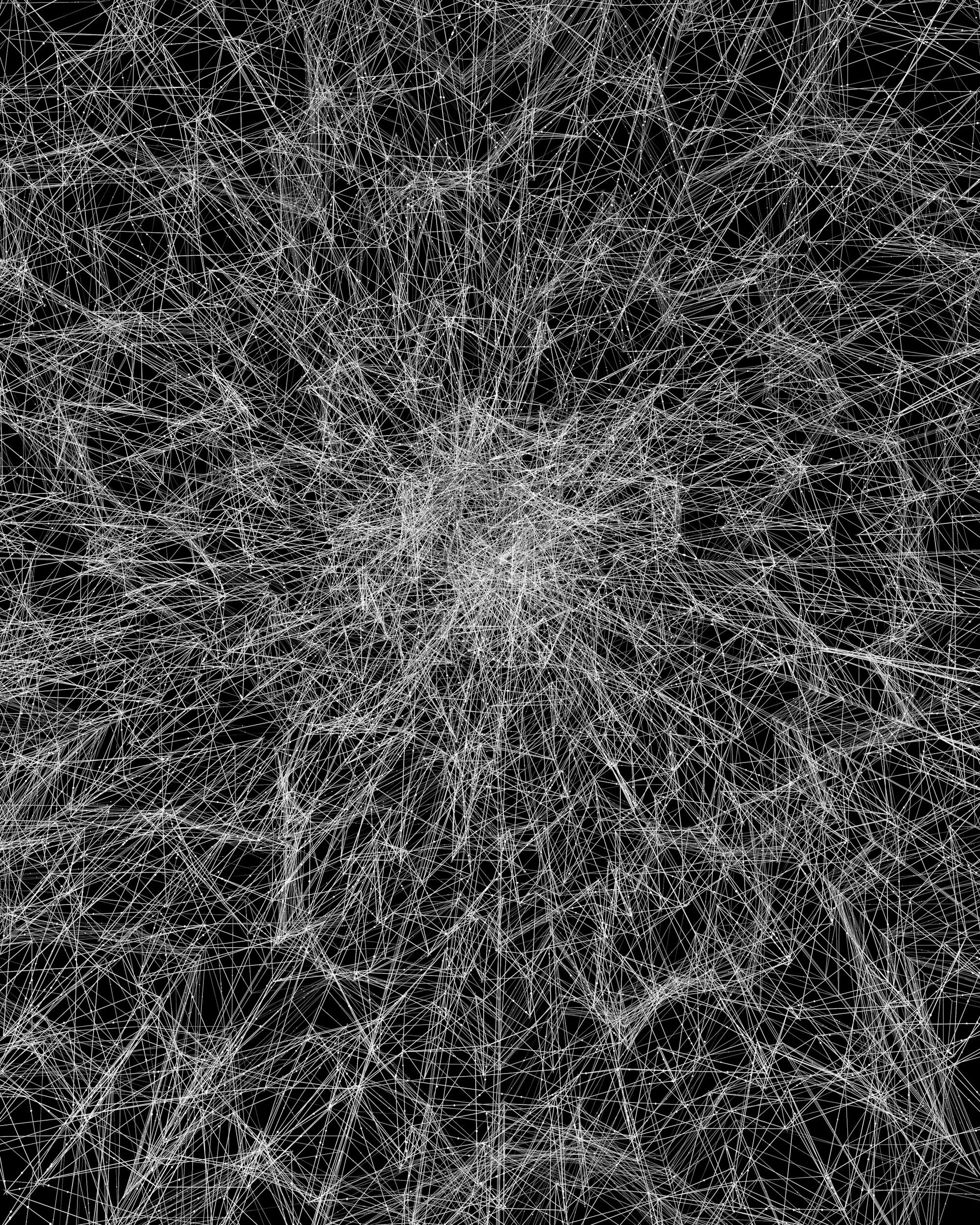
A spider's web illuminated by morning light, revealing the intricate connections that are often hidden from view. For me, ADHD can feel less like a lack of attention and more like living in a mind where ideas, experiences, emotions and observations are continuously woven together.
People often describe ADHD as a difficulty paying attention.
That has never quite captured my experience.
If anything, my challenge has often been the opposite.
Not a lack of attention.
An abundance of it.
A single experience rarely stays where it started.
A conversation becomes a question.
A question becomes a reflection.
A reflection becomes an article.
An article changes how I understand my life.
And then, somehow, I'm redesigning my website late at night because the original thought has grown roots and spread in five different directions.
Earlier this week, I went to the dentist.
By lunchtime, I was reflecting on wealth, worry, boundaries, trauma, meaning and the kind of life I want to build.
The next day, I was sitting near the Clock Tower between clients, listening to Maria Popova, thinking about spaciousness and wondering why the removal of an old shed had made me so happy.
Not because of the shed itself.
Because of the space that appeared when it was gone.
To somebody else, those things may seem entirely unrelated.
To me, they feel like part of the same conversation.
That is often what living with ADHD feels like.
Not randomness.
Connection.
My mind rarely moves in straight lines.
It moves in webs.
One thread touches another.
Then another.
Then another.
A client describing anxiety in a healthy relationship makes me reflect on self-image.
A conversation about money becomes a reflection on meaning.
A parenting moment becomes a reflection on self-forgiveness.
A shed being removed becomes a reflection on space.
Life is constantly talking to itself.
At least inside my mind.
Sometimes it is beautiful.
Sometimes it is exhausting.
Over the last few days I have been wondering why I often feel so busy.
On paper, I currently work fewer than two days a week in private practice.
Yet in a single day I might:
Drop children off.
Meet with clients.
Write session summaries.
Collect furniture.
Donate items to charity.
Think about an article.
Reflect on a conversation.
Feed the animals.
Explore ideas for a therapy group.
Update my website.
Listen to a podcast.
Wonder about the meaning of something that happened three days ago.
And still feel as though there are ten more things I haven't quite finished thinking about.
As I read that sentence back, I find myself laughing because it is genuinely true.
It may be one of the most accurate descriptions of my day-to-day experience I have ever written.
Sometimes I think this is one of the things people don't always understand about ADHD.
The mind does not necessarily stop when the activity stops.
A conversation may continue for hours afterwards.
Not because I am stuck in it.
Because it is still unfolding.
One idea connects to another.
Then another.
Then another.
A meaningful family session can stay with me for the rest of the day.
A difficult interaction may take time to settle.
A beautiful moment in the park can become a reflection.
An ordinary experience can suddenly reveal something important.
I don't think deeply because I try to.
I think deeply because experiences continue to reverberate long after they happen.
What I am discovering is that concentration often follows meaning.
The more aligned I am with what matters, the easier it becomes to sustain attention.
Writing has helped.
Reflection has helped.
Meditation has helped.
Awareness has helped.
Not because my mind has become quieter.
It hasn't.
But because I am becoming more familiar with how it works.
More able to notice what captures my attention, what drains it and what genuinely matters.
At the same time, I am increasingly aware of the risk of burnout.
A mind that notices everything can also become overwhelmed by everything.
That is why routines have become important to me.
Sleep.
Meditation.
Time in nature.
Writing.
Moments of spaciousness.
Not because they remove the intensity.
Because they help me hold it.
The older I get, the more I have come to appreciate the gifts as well as the challenges.
The same mind that struggles to prioritise can recognise patterns.
The same mind that follows endless threads can discover meaning.
The same mind that becomes overwhelmed can notice connections others may miss.
Some of my deepest insights have not arrived because I sat down intending to find them.
They emerged because one experience illuminated another.
A client.
A dentist.
A market trader.
A chestnut picked up in the park.
A therapy session.
A shed.
A conversation.
A piece of writing.
None of these live in separate boxes for me.
They inform one another.
Perhaps that is why writing has become so important.
Writing allows me to follow the thread.
To see where it goes.
To discover what all those seemingly unrelated moments might be trying to tell me.
When people ask me what ADHD feels like, I often find myself pausing before I answer.
Not because I don't know.
Because there isn't one answer.
There are many.
But perhaps this is one of them.
Living in a mind where everything reminds me of everything else.
A mind that notices patterns.
Connections.
Contrasts.
Possibilities.
A mind that can be exhausting to inhabit some days and endlessly fascinating on others.
A mind that doesn't always move in a straight line.
But often finds meaning in places I wasn't expecting to look.
🌿💛
Afterthought
As I read this piece back, I notice a sense of relief. Not because I have explained ADHD or arrived at any definitive answers, but because something that has lived mostly as experience now exists in words. Seeing it on the page helps me recognise the patterns, connections and way of being that I often take for granted. There is something reassuring about feeling understood by your own writing. For now, that feels enough.
M.A.L.I. Neuro-Somatic Practice
Reflect. Reconnect. Grow.
